
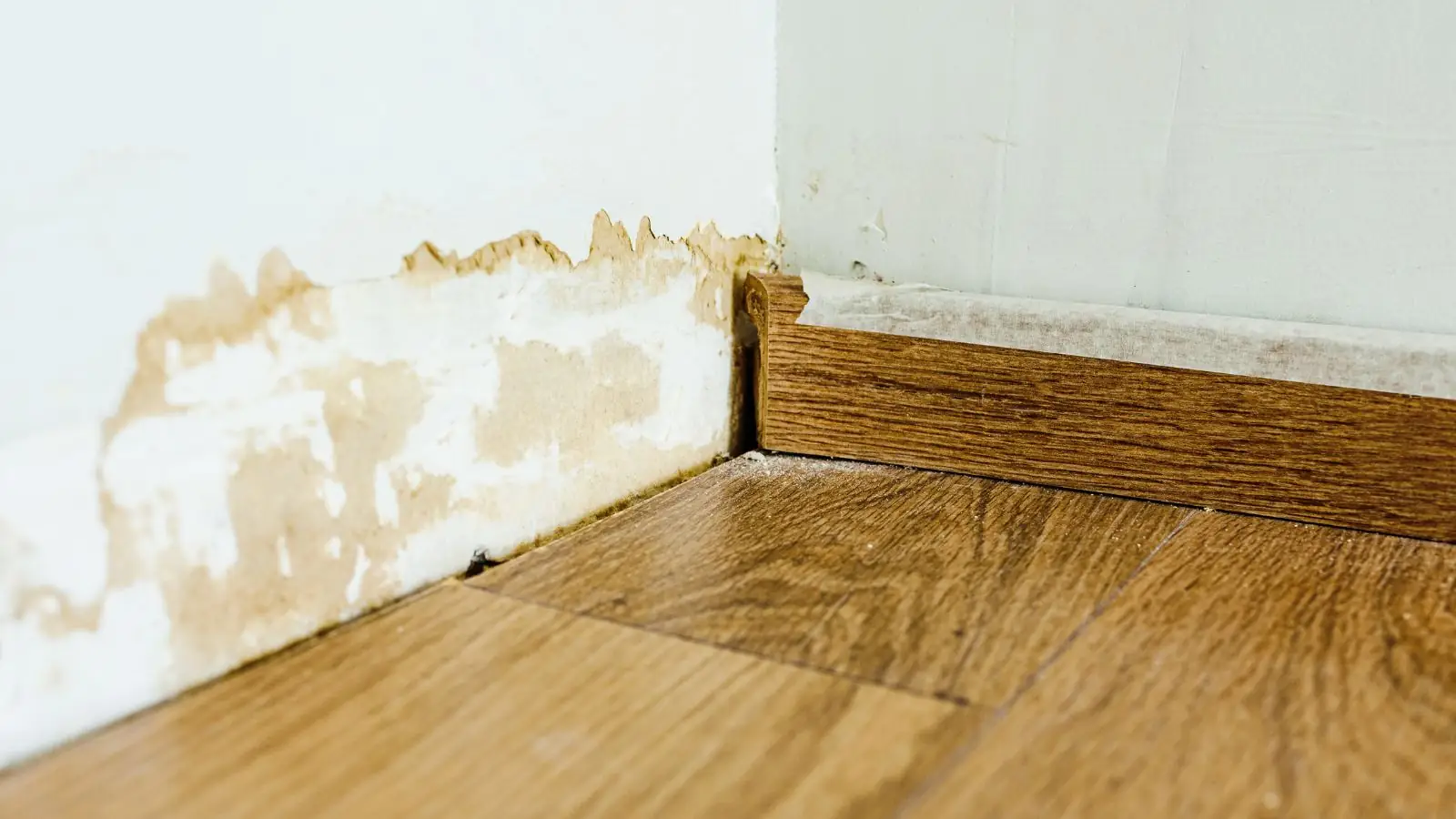
Drywall and water: what actually happens
Drywall is gypsum between sheets of paper, and the paper wicks water like a wick. Water can travel several inches up a wall from the floor within hours. Once drywall is saturated, it softens, the paper delaminates and the board loses strength.
Whether it can be saved depends on three things: how clean the water was, how long it stayed and how wet it got. Clean water caught within a day on firm drywall is often dried in place. Gray or black water, or boards that are soft and crumbling, come out.
Dry in place or cut out
| Condition | Likely outcome |
|---|---|
| Clean water, under 24 hours, board still firm | Dry in place with air movers, dehumidifiers and readings |
| Clean water, several days wet | Often removed because mold risk rises |
| Gray water at any time | Removed at least to above the water line |
| Black water or sewage | Removed and the cavity cleaned and disinfected |
| Soft, bubbling or crumbling board | Removed |
| Insulation inside the wall is wet | Wall opened to remove and dry it |
Readings and inspection decide each wall.
The flood cut
When wall drywall is removed, crews often make a flood cut, a straight cut about 12 to 24 inches above the highest wet point, so the cut edge lands on dry board. The cut goes to the nearest stud so the new piece has something to screw to. Opening the wall also lets the cavity dry faster, and it lets the crew look at framing and insulation.
A crew also removes baseboard and trim in wet areas, because these often hide water behind them. After readings show the frame is dry, new drywall goes in, seams are taped and finished, and the wall is primed and painted. For a bigger loss, the flood damage restoration page explains how contaminated water changes the scope.
Repairing the wall after drying
- Confirm the framing is dry with a meter.
- Install new insulation if needed and cut new drywall to fit.
- Tape and mud the seams in thin coats with drying time between.
- Sand, prime and match the texture.
- Paint the whole wall so the patch does not show.
The finishing work in the water damage repair scope is where color and texture matching happen. A flat paint over a patch is the most forgiving. Glossy or dark colors show every seam.
Permits and rules in Colleyville
The City of Colleyville's Building Inspections department handles permits, and the city's site lists permit application forms. Permit rules depend on the work. Replacing drywall is a surface repair in most cases, but moving walls, electrical or plumbing changes usually are not.
Call Building Inspections before you start, especially when an electrician or plumber will open the wall. Neighboring cities have their own rules. North Richland Hills, for example, says permits are required for water heater, HVAC, electrical and gas work.
Mold behind drywall
Drywall that stayed wet for days can grow mold on the paper facing and in the cavity. Dark spots on the back of a removed section are a sign to call for an assessment. The Texas rules for mold work are described on the mold remediation page. Do not sand moldy board, because that spreads particles through the house.
The same crews serve Euless and the other nearby towns.
What sits behind the drywall
Behind most walls are studs, insulation, wiring and plumbing. Water that gets into the cavity can wet the insulation, run down inside the wall and pool at the bottom plate, which is the wood board that sits on the floor. Moisture there can stay hidden long after the surface of the wall feels dry.
That is why crews often make an inspection cut near the bottom of a wet wall. Seeing the insulation and the bottom plate answers whether the cavity needs to open further. Electrical outlets in a wet wall also need to be checked before power is restored, and an electrician should inspect if there is any doubt.
Material and finish choices
- Standard drywall is fine for most rooms once the cavity is dry.
- Moisture-resistant board, often called green board, is common in bathrooms and laundry areas and may be worth using at the repair.
- Cement board is used behind tile in showers and tub surrounds.
- Mold-resistant board has a treated face and can be chosen in areas that were damp for a long time.
- Texture such as knockdown or orange peel is matched to the existing wall as closely as possible.
None of these replaces fixing the moisture source. A better board in a damp wall only delays the next problem.
Sometimes, if the water was clean, the board is firm and drying starts quickly. Readings decide, and the wall may still be opened to dry the cavity.
Usually above the highest wet reading, often 12 to 24 inches above the visible water line, ending at a stud.
Texture and paint can be matched closely. Painting the whole wall gives the cleanest finish.
Surface drywall replacement typically does not, but electrical, plumbing or structural changes can. Ask Colleyville Building Inspections before you start.