
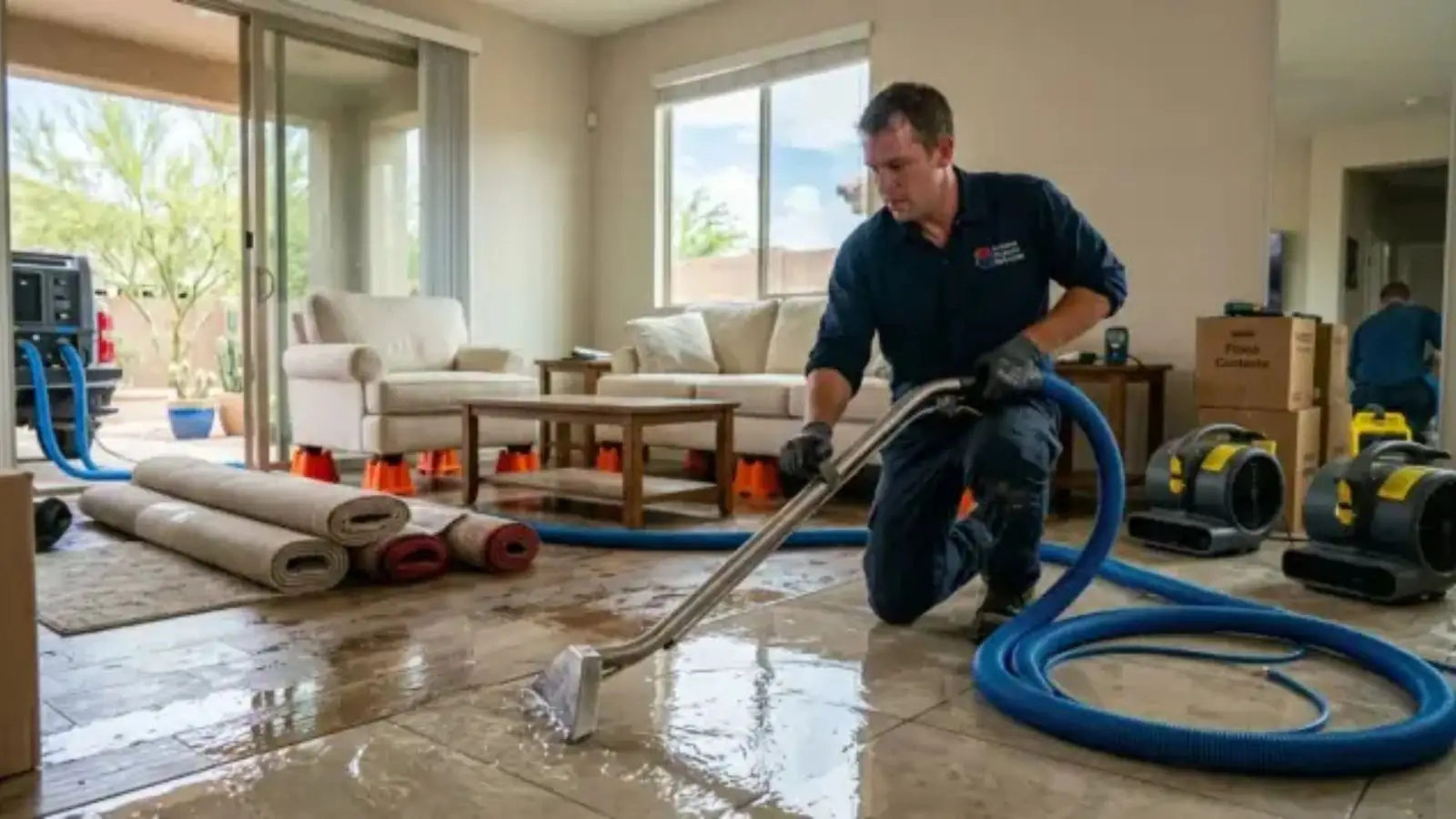
When standing water is an emergency
Water on the floor becomes an emergency when it is still coming in, when it has reached outlets, appliances or insulation, or when it is more than a puddle. A burst supply line, a failed water heater or an overflowing toilet can put a few hundred gallons into a house within an hour. Every hour the water stays, it moves further into subfloor, wall cavities and carpet pad.
This page is for the first call. Emergency water removal means pumping and extracting the standing water so drying can begin, and the dispatch line answers around the clock for exactly that. If the water has already stopped and you are asking what comes next, the water mitigation page covers the drying phase.
Before anything else: electricity and water
If water is touching outlets, a power strip or an appliance, stay out of the room. Turn off power at the breaker only if you can reach the panel while standing on a dry floor. If the panel itself is wet, do not touch it. Call 911 or your electric utility for any shock, sparking or gas smell, and call us after you are safe.
What to do while you wait for the crew
- Stop the sourceTurn off the main water valve for any supply line, tank or appliance leak. The Texas Department of Insurance advises shutting water off at the main to limit damage.
- Keep power safeSwitch off breakers for wet areas only if the panel is dry and reachable. Unplug electronics from dry outlets.
- Lift what you canMove small furniture, rugs, books and electronics onto dry surfaces. Do not strain to lift heavy furniture.
- Protect people and petsKeep children and animals out of the water until you know where it came from. Sewage or outdoor floodwater carries contamination.
Take photos and a short video of the water, the source and the damaged items before anything is moved. Your insurer will ask for them, and TDI points out that an insurer can deny part of a claim when a homeowner fails to protect the property from further damage.
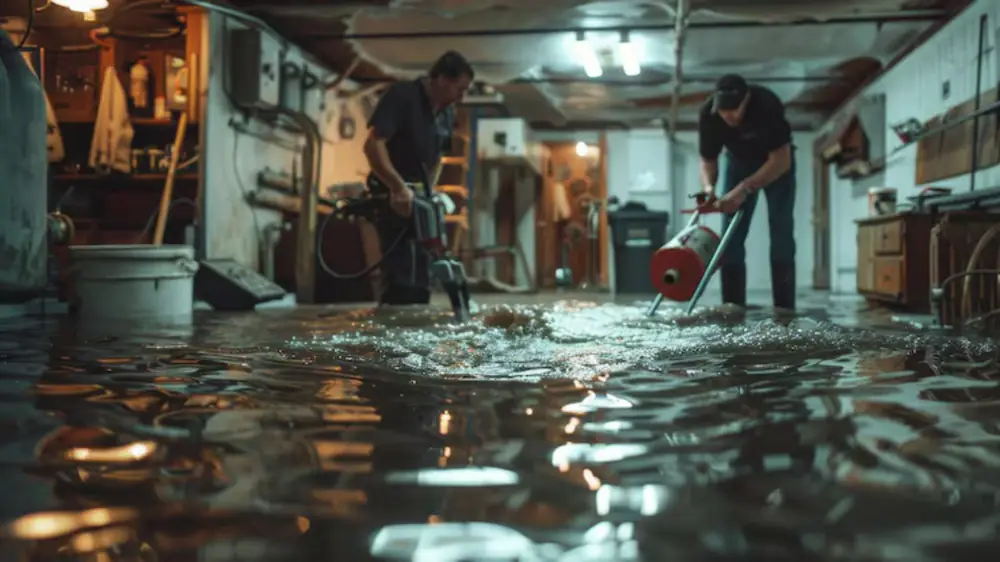
How standing water is removed
The method depends on how deep the water is and what it sits on. Shallow water on hard floors is pulled with wet vacuums and portable extraction units. Deeper water, such as a flooded lower level or a house with several inches throughout, calls for submersible pumps first and then extraction units to remove the rest.
Carpet and pad are extracted in place when the water is clean and the carpet is in good shape. If the water was gray or black, the carpet and pad are cut out and hauled away instead, because they cannot be made safe again.
Extraction is only the start. Water left in the structure keeps doing damage, so a crew reads moisture levels with meters and a thermal camera, then sets up the drying equipment described on the water mitigation page. Removing the water and drying the structure are two jobs that run back to back, not one.
Burst pipe water damage: stop it, drain it, dry it
A burst pipe is the most common reason people call this line at 2 a.m. Pipes that run through unheated attics, garages and exterior walls are the usual failure points in a hard freeze, and supply lines to toilets, sinks and washing machines fail in any season. Once the main valve is shut, the water already released has to go somewhere, and it travels down through ceilings and along wall cavities.
The first visit for a burst pipe covers four things: confirming the water is off, extracting standing water, opening wet ceilings or wall sections where water is trapped, and placing drying equipment. A ceiling that is sagging or bulging with water is released on purpose, in a controlled spot, so it does not collapse on its own. Plumbing repair itself belongs to a plumber, and we will say so rather than guess.
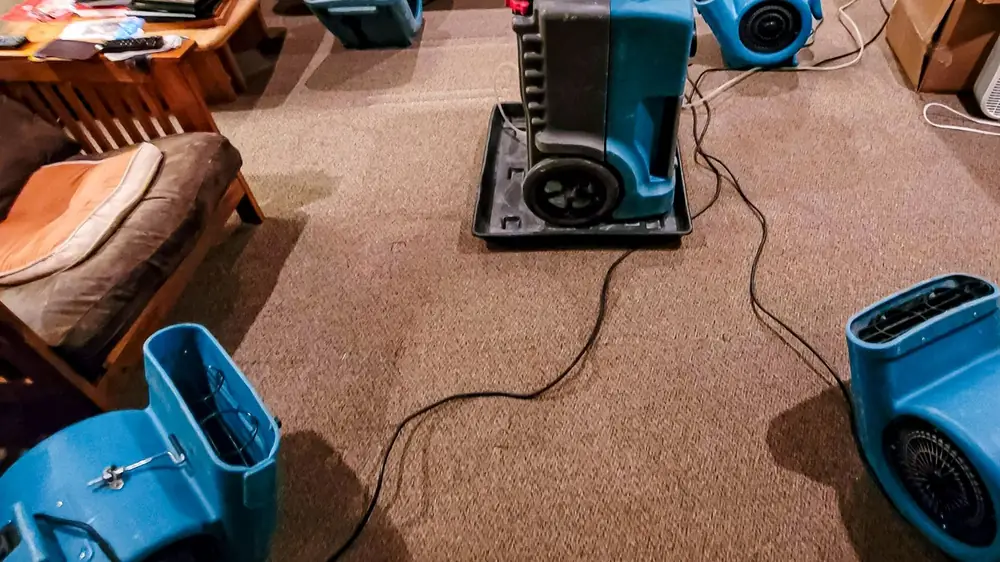
Water removal and the first 48 hours
| Time since the water arrived | What it usually means | What happens next |
|---|---|---|
| Under a few hours | Water is mostly on surfaces and in carpet. | Extraction and equipment setup can often save pad and drywall. |
| About a day | Moisture is moving into baseboards, drywall and subfloor. | Opening walls and removing wet insulation becomes more likely. |
| 24 to 48 hours | The EPA window for drying wet materials is closing. | Mold risk rises, so materials that stayed wet are removed. |
| More than 48 hours | Wet materials have often been wet long enough for mold to start. | A mold assessment may be part of the plan. |
Timing varies with temperature, humidity and what the water soaked.
What emergency water removal costs and how it is priced
The price depends on depth, area, water category, materials and how many days of drying follow. A shallow spill on tile is a small job. Water through two floors of a house with carpet, pad and insulation is a large one. Call (817) 623-9267 and the dispatcher will explain how the scope and the price are built before anyone starts work, and you decide whether to go ahead.
Insurance often pays for sudden and accidental water damage and often does not pay for a leak that went on for weeks, according to TDI. Your own policy decides. Our crews record readings, photos and what was removed so you have a written record for your claim.
Water in the house right now?
Call the 24/7 line. Same-day response is available when a crew is free, and the dispatcher will tell you what to do while you wait.
Where the water comes from in Colleyville homes
Colleyville provides its own water and wastewater service, so a main break in the street or a leak ahead of your meter belongs to the city. Public Works lists an after-hours number for water emergencies at (817) 743-4522. A leak after the meter, inside your house, is yours, and that is the one to call us about.
Storms are the other source. Colleyville's own stormwater page says flash flooding generally begins at about one inch of rain per hour. When that much rain arrives, water can come in at doors, garage thresholds and low windows, and the flood damage restoration page covers that kind of loss, including contaminated water.
If you live in Grapevine, Southlake, Keller, North Richland Hills or Euless, the same line serves you. The Grapevine page explains how local conditions there differ.
Yes. The dispatch line is open 24 hours a day, every day. A crew can be sent the same day when one is available, and the dispatcher tells you what to do about the source while that is arranged.
That depends on depth and area. A few inches over a single room can be extracted in a short visit, while a flooded floor plan takes longer. We do not promise an arrival time, and the dispatcher will explain what to expect on your call.
A shop vacuum helps with a small spill on a hard floor. It does not pull water out of carpet pad, subfloor or wall cavities, and it is unsafe near wet outlets. For more than a small spill, call before you start.
Leave if water is touching outlets or the panel, if you smell gas, or if the water may be sewage. Otherwise, stay out of the wet rooms and keep children and pets away until the crew has looked.
Clean water caught early often lets carpet be extracted and dried in place, though the pad may still be replaced. Gray or black water means the carpet and pad are removed.