
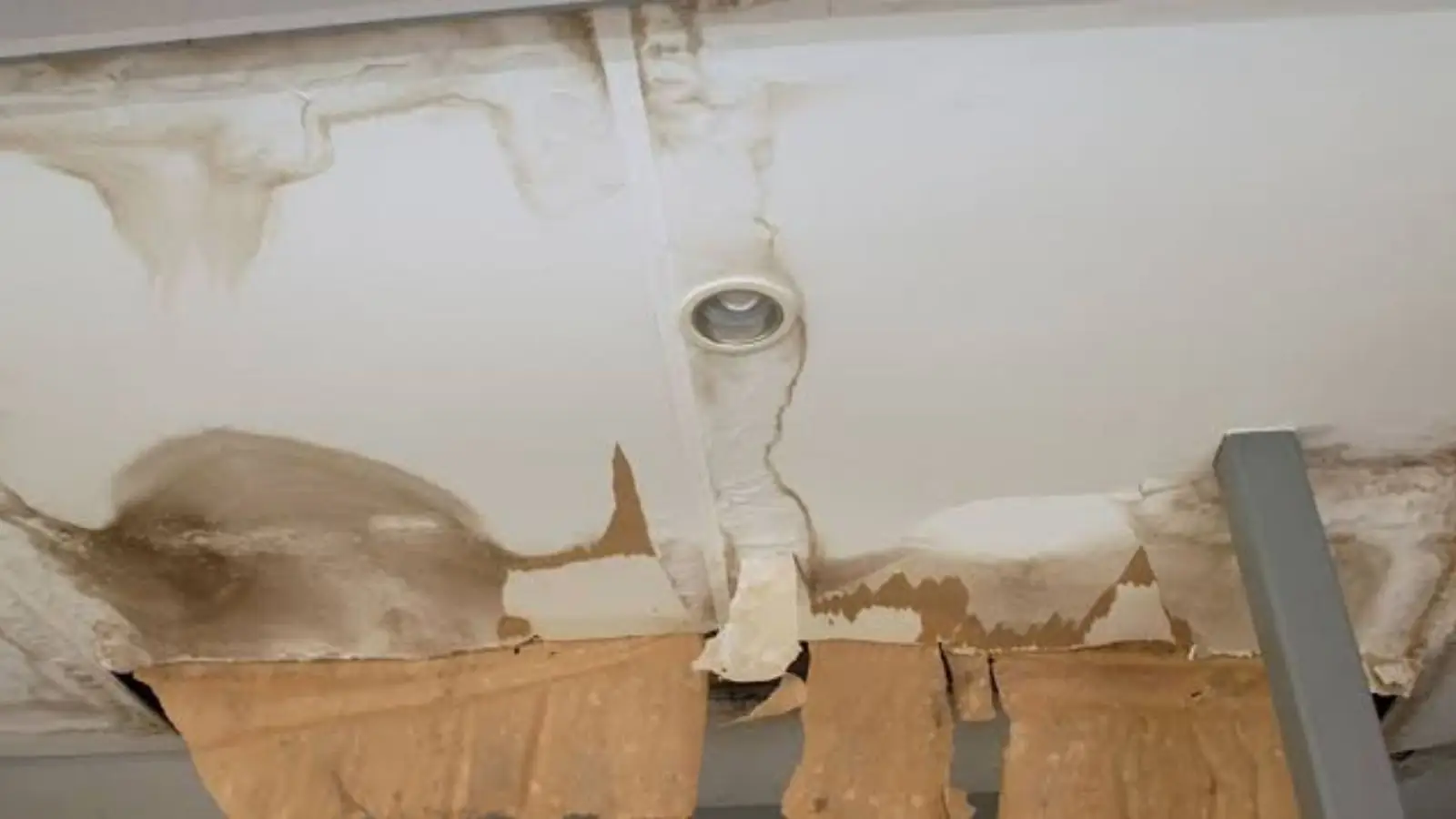
First, find out what leaked
A ceiling stain has three common sources. It can be plumbing from the floor above, a leak in the roof or flashing, or condensation from an air conditioner in the attic. The shape of the stain and the timing offer clues. Stains that appear after rain point toward the roof, and stains near a bathroom or kitchen point toward a supply line or drain.
Nothing you do to the ceiling will last until the leak is fixed. If the source is plumbing, shut off the water and call a plumber. If it is the roof, a roofer has to fix the entry point. Then the ceiling can be dried and repaired.
If the ceiling is sagging or bulging
A bulge means water is pooled above the drywall and the weight can bring the ceiling down. Keep people out of the room, put a bucket under the lowest point and call the 24/7 line. A crew can release the water in a controlled spot. Do not poke it yourself while standing below it, and stay away if the water may have reached light fixtures.
Steps for a small ceiling repair
- Stop the leak and let the area dry. Use a moisture meter if you have one, or ask a crew to read it.
- Photograph the damage and the source before you cut anything. Your insurer may want them.
- Cut out the stained or soft drywall in a square or rectangle that reaches the nearest framing.
- Look at the insulation and framing above. Wet insulation comes out. Let the framing finish drying.
- Screw a new piece of drywall to the framing, tape the seams and apply joint compound in thin coats.
- Sand, prime with a stain-blocking primer and paint the ceiling edge to edge so the patch does not flash.
A patch can look fine for a week and then show a ring again if the framing was still wet. Waiting for dry readings before you close the ceiling is the single most useful habit.
When a do-it-yourself repair is not enough
| Situation | Why a crew helps |
|---|---|
| Water came from a toilet, a drain or outside the house | Gray or black water requires removal and cleaning, not just patching. |
| The stained area is larger than a few square feet | More insulation and drywall is probably wet than you can see. |
| The ceiling has been wet for several days | Mold may have started. See the mold remediation page. |
| You have texture or popcorn that must match | Matching is easier with the right tools and a controlled sample. |
| An insurance claim is in play | Written readings and photos help your adjuster. |
A crew confirms with readings at your house.
Storms and ceilings in North Texas
The National Weather Service says large hail, damaging wind and flooding occur nearly every year in the Dallas-Fort Worth Metroplex. The NWS also lists the April 11, 2016 storm, which set an NWS Fort Worth area record hailstone of 5.25 inches.
A ceiling stain after a hail or wind event usually means the roof, flashing or a vent boot was damaged, so ask a roofer to inspect before the ceiling is painted. Texas Department of Insurance guidance says to report storm damage promptly and not to make permanent repairs before the insurer sees the loss.
What a professional adds
A crew reads moisture in the ceiling, the walls below it and the insulation above. It extracts any water that has pooled, removes materials that cannot dry, sets drying equipment and writes down readings for each visit. After that, the water damage repair work of drywall, texture and paint follows. If the leak came from a burst pipe, the first steps are on the water mitigation page.
Neighbors in Keller and North Richland Hills can call the same line.
Tools and materials for a small patch
- A utility knife and a drywall saw for cutting out damaged sections
- A moisture meter, or a crew's reading, to confirm the area is dry
- A piece of drywall that matches the ceiling thickness, often half an inch
- Drywall screws, joint tape and joint compound
- A stain-blocking primer and ceiling paint
- A drop cloth, a dust mask and eye protection
Wear eye protection when cutting overhead, because insulation and dust fall straight down. If the ceiling has texture, a can of matching spray texture or a texture sprayer saves a visible patch. For anything more than a small area, a pro finishes faster and matches better.
Mistakes that make ceiling repairs fail
- Patching before the area is dry, which traps moisture and brings the stain back.
- Cutting only the visible stain and leaving wet drywall beside it.
- Skipping the primer, so the old stain bleeds through new paint.
- Painting only the patch, which shows as a lighter or glossier square.
- Forgetting to check the attic, where wet insulation keeps feeding the ceiling.
A second leak above a repaired ceiling usually shows up as a new ring at the edge of the patch. If that happens, stop and look for the source again, rather than adding more compound.
Only after the source is fixed and the area is dry. Painting over a damp stain hides it for a while and traps moisture. A stain-blocking primer helps once everything is dry.
Until moisture readings match unaffected drywall nearby, which is often several days. A crew checks daily so you do not guess.
It may if the leak was sudden and accidental, according to the Texas Department of Insurance, and it may not for a slow leak. Read your policy and ask your insurer before repairs.
Call your insurer to report the loss promptly, and ask a roofer to document the roof damage. Do not make permanent repairs until the insurer has seen the damage, and use tarps to prevent more water from entering.