
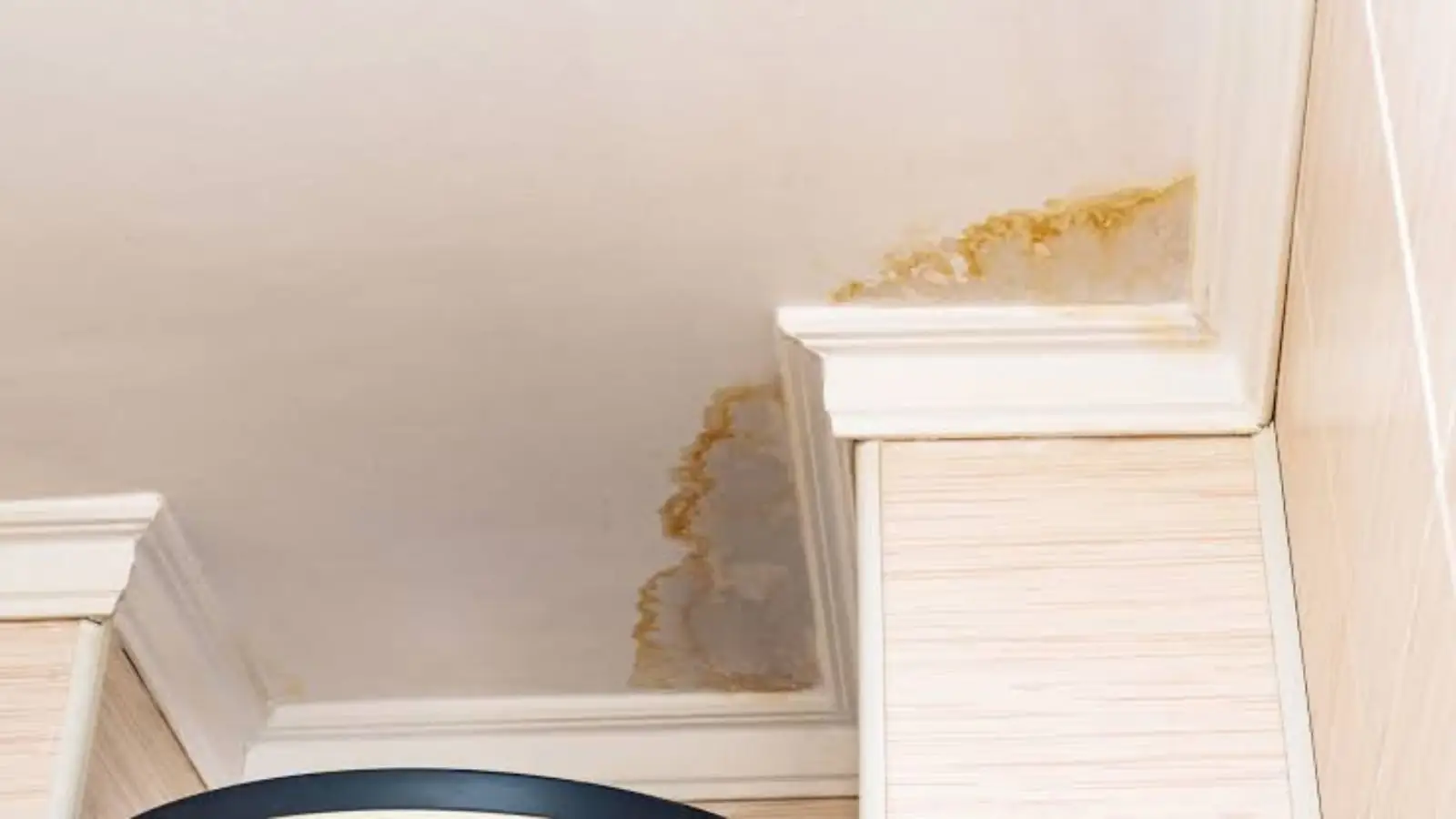
A quick test for whether it is minor
Water damage on a ceiling is minor only if all of the following are true. The stain is small and not growing, and the drywall is firm and not sagging. There is no musty smell, the source is known and fixed, and the area has been dry for several days. If even one of those is uncertain, treat it as unknown and look closer.
| Sign | Usually minor | Look closer |
|---|---|---|
| Size | Smaller than your hand, no change in a week | Spreading or ringed with new edges |
| Texture | Surface is firm and dry | Soft, bubbling or crumbling |
| Color | Light tan, no dark spots | Dark spots or fuzzy patches |
| Smell | None | Musty or earthy |
| Shape | Flat ceiling | Bulge or sag |
| Source | One-time event, fixed | Unknown or recurring |
None of these replaces a moisture reading.
Why a small stain can hide a bigger one
Water follows gravity and then spreads across insulation, framing and the top of the drywall. The visible stain is where it finally came through, which can be several feet from the true source. Insulation soaks up water and releases it slowly, so a ceiling that looks dry may still be feeding moisture to the drywall.
That is why a thermal camera and a moisture meter are the standard way to check. They show a wet area behind a dry-looking surface in seconds. If you do not have either, a crew can bring them, and the water mitigation page explains what happens next.
What to do in the first 24 hours
- Find and stop the source. Check the plumbing above, the roof and the attic.
- Photograph the stain with a coin or ruler for scale. Repeat in a day to see if it grows.
- Place a fan in the room to move air. Open windows only if the weather and humidity allow.
- Do not paint, caulk or seal over the stain.
- If the ceiling is soft or the stain grows, call a crew.
Rain, humidity and the clock
The National Weather Service reports a 1991 to 2020 normal of 37.01 inches of rain a year at Dallas-Fort Worth, and says spring and fall are the wettest periods. A new ceiling stain after a wet week often follows that pattern.
The EPA advises drying wet materials within 24 to 48 hours to head off mold growth, and recommends keeping indoor humidity below 60 percent, ideally between 30 and 50 percent. Both numbers are a good reason to act on a minor stain instead of waiting.
When minor becomes a mold question
If a ceiling stays damp for several days, mold can start behind it. Dark spots, a musty smell or a stain that returns after painting all point to moisture that is still present. The mold remediation page explains testing and removal, and we do not make health claims about mold.
Neighbors in Grapevine and Keller use the same dispatch if they need a crew to check.
Keep a stain log
A simple log gives you facts instead of guesses. Take a photo of the stain with a coin beside it, then repeat each day for a week at the same time and angle. Trace the outline in pencil on the ceiling if it is safe to reach. If the outline moves, water is still coming in. If it holds still and the surface stays firm, the problem may have ended.
Write down every time the stain changes after rain, after a shower, after the air conditioner runs or after the washing machine drains. A pattern points to the source, and a plumber or roofer finds a leak faster with that information.
What a crew checks on a visit for a small stain
- Moisture readings on the ceiling, the walls below and any wall above
- A thermal image of the area to find wet pockets
- Attic insulation above, if you have attic access
- Plumbing and roof penetrations nearby
- The air conditioner drain pan and condensate line, if the air handler is in the attic
If everything reads dry, the crew tells you so and the fix may be a patch and paint. If not, the scope grows, and you will hear why. That is the value of a short visit: a small stain gets a real answer.
When a small stain is not small
A stain the size of a hand can sit under a much larger wet area. Press the ceiling gently around it. A soft spot, a sag or a bulge means water is pooling above the drywall, and that needs attention the same day. Poke nothing and stand clear, because a saturated section can drop with little warning.
If the ceiling is bulging, place a bucket beneath it, move furniture and call the line. A crew can relieve the pressure safely and limit the damage.
Only if the source is fixed, the stain is dry and firm and it is not changing. If any of those is uncertain, get a reading.
A moisture meter or thermal camera shows it. By touch, damp drywall feels cool and soft, but readings are more reliable.
It can if you wait. The Texas Department of Insurance advises reporting damage promptly. Take photos now even if you are not sure you will file.
A stain that appears after rain and not after using plumbing points toward the roof. A stain near a bathroom or kitchen that appears after use points toward plumbing. A roofer or plumber confirms the source.