
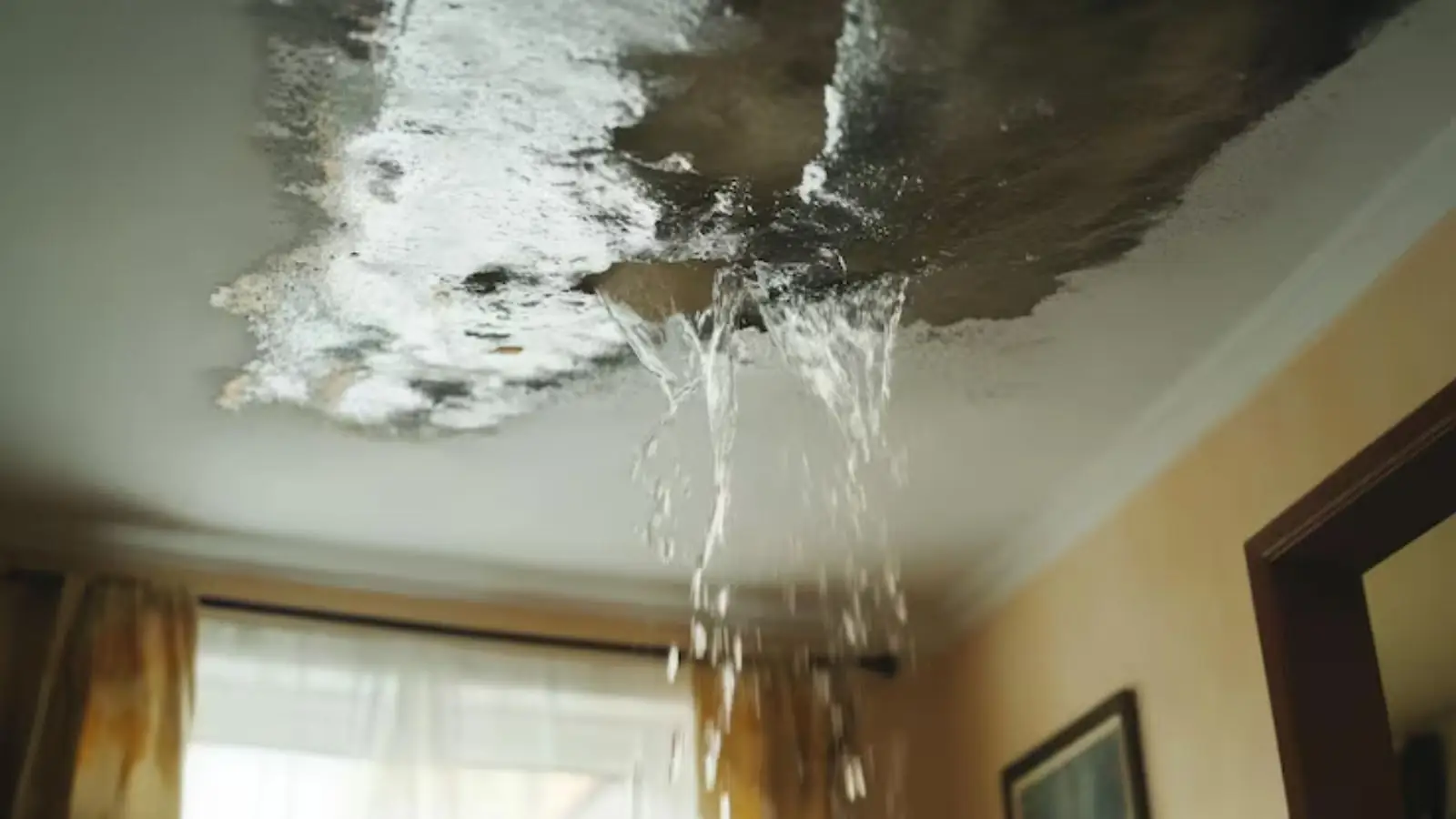
What to do in the first day
- Stay off a wet roof. A roofer or your insurer's inspector goes up, not you.
- Place buckets and move furniture from under drips. Keep people out from under any bulging or sagging ceiling and call the line.
- Photograph the ceiling, the damp walls and any visible roof damage from the ground.
- Cover the opening if a roofer can tarp it the same day.
- Call your insurer and the 24/7 line, because drying should begin before the next rain.
Temporary protection is expected. The Texas Department of Insurance advises homeowners to protect the property from further damage and not to make permanent repairs before the insurer sees the loss.
Where roof water ends up
| Entry point | Where water travels | What gets wet |
|---|---|---|
| Missing shingles or damaged decking | Through the deck into the attic | Insulation, ceiling drywall |
| Flashing at a chimney or wall | Down the wall cavity | Interior wall, baseboard, floor |
| Vent boot or pipe penetration | Along the pipe | Ceiling near plumbing walls |
| Skylight or window | Around the frame | Wall below, window trim, floor |
| Gutter or valley overflow | Behind fascia and into eaves | Soffit, exterior walls |
A crew traces the path with readings.
Drying a wet attic, ceiling and wall
Roof water spreads further than it looks. It soaks into insulation, runs along rafters and drips onto the ceiling at a point far from the entry. A crew uses a moisture meter and a thermal camera to follow the path, removes insulation that cannot dry, opens the ceiling when readings show trapped water and sets air movers and dehumidifiers.
The water mitigation page covers the equipment, and the water damage repair page covers drywall, insulation and paint after drying. If the loss was found late, the mold remediation page applies.
Storm seasons and drainage in Colleyville
The National Weather Service says large hail, damaging wind and flooding occur nearly every year in the Dallas-Fort Worth Metroplex, and that severe weather frequency peaks in spring. Spring and fall are the wettest periods.
The City of Colleyville's Stormwater Quantity page says flash flooding generally begins at about one inch of rain per hour, which is the kind of downpour that exposes a weak roof, a clogged gutter or a poorly sealed window in the same hour.
Who handles what
- Roofer: inspects, tarps and repairs the roof
- Restoration crew: extracts, removes wet materials, dries and documents
- Insurer or adjuster: inspects the roof and the interior and decides coverage
- You: photograph, report promptly and keep receipts for temporary repairs
Coverage depends on your policy. A storm is often a sudden event, but wind and hail deductibles can differ from the standard deductible, so read your policy. We never promise that a claim will be approved.
Homes in Grapevine and North Richland Hills use the same line.
Tarping and temporary repairs
A temporary tarp is a standard step after a storm damages a roof, and it is usually done by a roofer, not the homeowner. The tarp covers the damaged area and is fastened beyond it, so water runs off and not under. It buys time while the insurer inspects and the permanent repair is scheduled.
Keep the receipt for the tarp work, because many policies reimburse reasonable temporary repairs. Do not nail the tarp through areas that may need to be inspected, and do not climb onto a wet or steep roof to do it yourself.
After the roofer: the rebuild order
- The roof is repaired and the entry point is confirmed sealed.
- The interior is dried and readings are recorded.
- Wet insulation is replaced and the attic is checked for moisture.
- Drywall is repaired, primed and painted.
- Flooring or trim damaged by drips is replaced.
That order matters. If the ceiling is painted before the roof is fixed, the next storm undoes the work. If the roof is fixed but the attic is not dried, the moisture stays and mold can follow.
Documenting storm damage for a claim
Photograph the roof from the ground, the ceiling stains inside and any debris in the yard before anything is moved. Note the date of the storm and when you first saw water. Keep the roofer's inspection report and the restoration crew's moisture readings, because together they show the insurer how the water got in and what it touched.
Hail and wind damage can look minor from the ground. A roofer can check shingles, flashing and vents up close, and an attic check after a storm often finds a stain days before it reaches the ceiling below. Do that check from the hatch only, in daylight, and take photos.
Do both as fast as you can. Tarp the roof so more water does not enter, and dry the interior at the same time, because wet materials start to deteriorate quickly.
It is better not to. Wet insulation holds water against the ceiling. A crew can remove or dry it while you wait.
A bulge, a sag or a dark ring that is spreading are warning signs. Keep people out of the room and call the line.
A weak roof can leak in moderate rain. The city notes flash flooding generally begins at about one inch of rain per hour, and that kind of downpour tests any roof.