
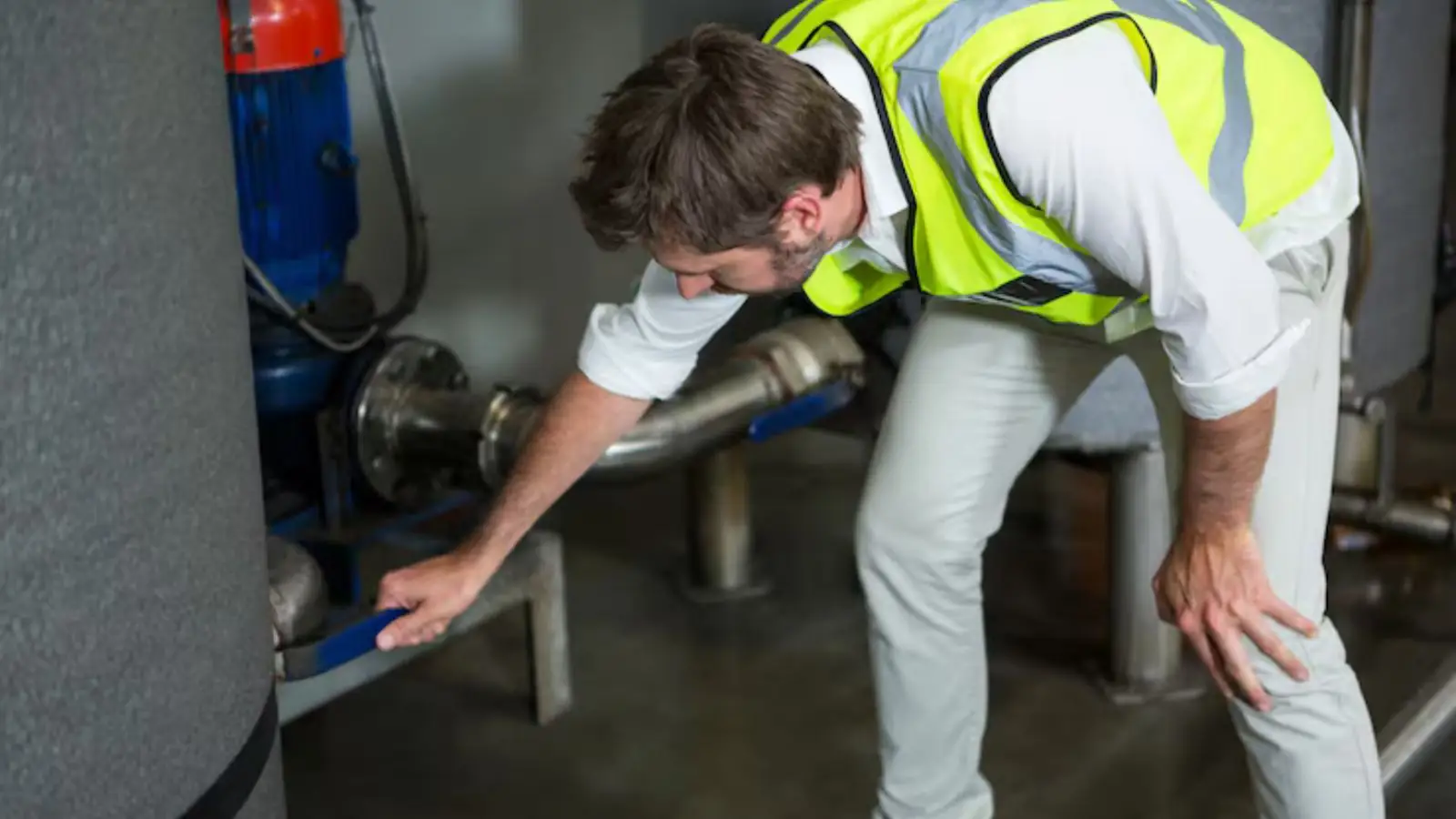
What to do in the first five minutes
- Turn off the cold water supply valve on top of the tank. If you cannot reach it, shut off the main water valve.
- Turn off power to an electric heater at the breaker, but only if the panel is dry and you can reach it standing on a dry floor. For a gas heater, turn the gas control to off if it is safe to reach.
- If you smell gas, leave the house and call 911 or the gas utility.
- Photograph the heater, the puddle and anything damaged before you move it.
- Call the 24/7 line.
Do not open a hot tank's drain valve to speed things up. The water inside can scald.
What a water heater leak can reach
Water heaters sit in garages, closets, attics and utility rooms, and each location sends water somewhere different. A garage heater floods the slab and wicks into walls. A closet heater soaks the carpet and the drywall behind it. An attic heater drops water through the ceiling below, and that is often the worst case because insulation holds the water above the drywall.
| Location | What gets wet | Typical response |
|---|---|---|
| Garage | Slab, wall bases, stored items | Extraction, dry stored items out, dry wall bases |
| Closet or hallway | Carpet, pad, baseboard, drywall | Extraction, pad removal, wall opening if wet |
| Attic | Insulation, ceiling drywall below | Release trapped water, remove insulation, dry ceiling |
| Utility room | Flooring, cabinets, adjacent rooms | Extraction, drying mats or equipment, cabinet check |
Always confirm with readings.
Cleanup after the leak
Water from a water heater is usually clean when it leaves the tank, but it may pick up sediment and soil on the way. The category matters for materials, and a crew determines it on site. The water damage cleanup page explains how wet materials are removed and surfaces cleaned.
Drying follows cleanup, with air movers and dehumidifiers running until readings reach the dry standard. If the tank leaked slowly for weeks, mold may be present, and the mold remediation page applies.
Permits for a water heater replacement
A leak usually ends with a new heater, and a new heater can require a permit. In neighboring North Richland Hills, the city's Building Inspections page says water heater work needs a permit. In Euless, the city says permits are needed for water heaters. For Colleyville, ask the Building Inspections department what applies before the installer starts.
Colleyville also provides your water service, so a pressure problem or a main leak in the street is a call to Public Works, which lists an after-hours line for water emergencies.
Insurance and a failed water heater
The Texas Department of Insurance says sudden and accidental water damage is generally covered under most policies, while gradual leaks are generally not. A tank that bursts is usually sudden. A slow drip that stained the floor for months is not. The tank itself is typically not covered as damage to itself, so ask your insurer what applies. Take photos of the heater before it is hauled away.
Our crews record readings and photos. We never promise that a claim will be approved. Homes in North Richland Hills and Euless get the same documentation.
Preventing the next failure
- Know where the main shutoff is and test that it turns.
- Replace a heater that is leaking at the seams, since seam leaks mean the tank is failing.
- Place the heater in a drain pan with a line to a safe drain where possible.
- Look at the supply connectors and relief valve once a year.
- Consider a leak sensor in the pan or on the floor nearby.
Tank and tankless units: what changes
A tank water heater stores dozens of gallons, so a seam failure can release a lot of water at once. A tankless unit has no tank, so a leak usually comes from a connection or the heat exchanger and is smaller in volume. Both can leak for weeks if the drip is slow, and slow leaks lead to hidden damage, especially on the floor under the unit.
If the unit is on a slab, check around the base for rust and stained flooring. If it is in an attic, check the ceiling below for stains. Either one is a reason to call a plumber, and a restoration crew if materials are wet.
Choosing who replaces it
- Ask whether the installer will pull the permit, if the city requires one.
- Ask whether the old unit is hauled away and the drain pan replaced.
- Ask what happens with expansion tanks, shutoff valves and flexible connectors.
- Ask how the installer protects floors and walls while working.
- Keep the invoice and permit number for your insurer and for a future home sale.
Replace flexible supply connectors when a heater is replaced, since old connectors fail at the same time as the tank. A leak sensor on the floor beside the new unit costs little and warns you early.
Shut off the supply to the tank and use the rest of the house only if there is no gas or electrical risk. Call the line for next steps.
A standard tank holds several dozen gallons, and a failed supply line can keep adding more, which is why the shutoff comes first.
The slab itself dries slowly, and the wall bases and stored items wick water. A crew checks both.
Ask Colleyville Building Inspections. The neighboring cities of North Richland Hills and Euless both say water heater work needs a permit, so it is worth confirming.