
Water damage restoration in plain words
Restoration is not one task. It is a chain of tasks, and each one depends on the one before. Water that is not removed cannot be dried, and a structure that is not dry cannot be rebuilt without risking mold. When people say they need water damage restoration, they usually mean the whole chain, from the first call to the last coat of paint.
The industry reference for this work is ANSI/IICRC S500, the published standard for professional water damage restoration. It covers how water is classified, how drying is planned and how results are checked. You can ask any company whether its crews follow it.
The five stages, in order
- Stop the source. A plumber or the homeowner shuts off the supply. Nothing else matters until water stops entering.
- Extract standing water. Pumps and extraction units remove what is on the floor. This is the work on the emergency water removal page.
- Remove what cannot be saved. Wet carpet pad, saturated insulation and contaminated drywall come out so they do not hold moisture.
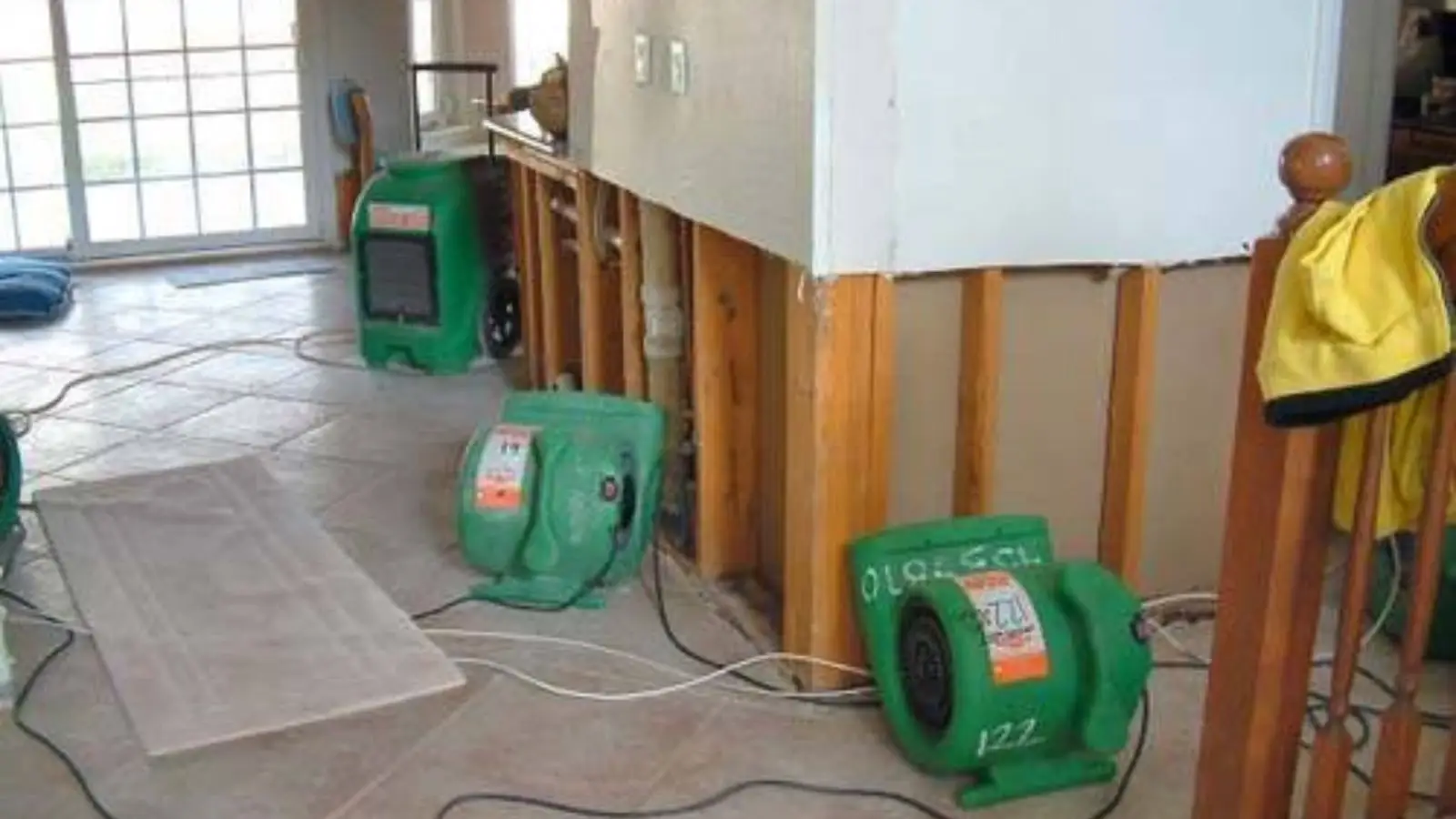
- Dry the structure. Air movers and dehumidifiers run for days while a crew records moisture readings. The water mitigation page explains this stage.
- Repair and rebuild. After readings show dry, drywall, paint, flooring and trim go back, as described on the water damage repair page.
Who does what after a leak
| Person | What they handle | What they do not |
|---|---|---|
| Plumber | Finds and fixes the leaking pipe, valve or fixture | Does not dry the structure |
| Restoration crew | Extracts, removes, dries, cleans and documents | Does not repair pipes or roofs |
| Roofer | Seals roof and flashing leaks | Does not dry the interior |
| Your insurer | Decides whether the loss is covered under your policy | Does not choose your contractor for you |
Roles overlap on small jobs, but this split holds for most losses.
Why speed matters
The EPA advises drying wet materials within 24 to 48 hours to head off mold growth. Texas A&M AgriLife Extension gives a slightly tighter 24-hour guideline for water-soaked areas. Neither is a promise that mold will not appear, and both exist because wet drywall and insulation stay wet for days when left alone.
That window is why restoration companies keep their lines open at night. A pipe that fails at 11 p.m. does not become a smaller problem by morning.
What this means in Colleyville
The City of Colleyville provides water, wastewater and garbage service to residents, and it buys treated water from the Trinity River Authority, according to the city's budget documents. If a main breaks in the street or a leak sits before your meter, the city's Public Works department is the right call, and it lists an after-hours line for water emergencies.
Leaks after the meter and inside your walls belong to you. That is when a plumber stops the source and a restoration crew starts on the structure.
How to decide when to call a restoration company
- Water is on the floor in more than one room or has touched carpet pad.
- A ceiling is stained, sagging or dripping.
- A wall or baseboard feels damp or paint is bubbling.
- The water came from a sewer, a drain or outside the house.
- A musty smell appears days after a leak that you thought was handled.
A small spill wiped up in minutes does not need a crew. Anything that soaked into a material does. If you are unsure, call and describe what you see, because the dispatcher can tell you whether it needs a visit. The same line serves nearby towns, including Southlake and Grapevine.
What to expect on the first call
The dispatcher will ask where the water came from, what it touched and whether it is still spreading. You will hear how the scope and the price are built before a crew starts, and you decide whether to go ahead. The company will not tell you what your insurance covers, because only your policy and your insurer decide that.
Restoration, mitigation, remediation: the vocabulary
Companies use these words loosely, which confuses homeowners. Mitigation means limiting damage fast: stopping the source, extracting water and starting the drying. Restoration is the larger umbrella that includes mitigation and the cleanup and repair that follow. Remediation is the word usually reserved for mold, where the job is to contain and remove the growth.
When you compare quotes, ask each company which of these it is quoting. A mitigation-only quote ends when the structure is dry, and a restoration quote usually includes the rebuild. Neither is better, but you need to know which one you are reading.
What a visit looks like on site
A first visit usually takes a few hours. The crew walks the affected areas, reads moisture with a meter, checks behind walls with a thermal camera and tells you what is likely to stay and what is likely to go. Pumps and extraction units start immediately if water is standing, and equipment is placed once wet materials have been removed.
Before the crew leaves, you should have a written scope or a clear explanation of the next steps, the date of the next visit and the number to call overnight. If you do not, ask.
No. Restoration covers stopping, removing and drying the water, plus cleanup. Repair is the rebuild afterward. Many homeowners need both, in that order.
Extraction can take hours, drying usually runs several days and repair can take days or weeks depending on the rooms. Moisture readings decide the drying end date.
It may be. The Texas Department of Insurance says most policies cover sudden and accidental water damage, while gradual leaks and flood are usually excluded. Your policy decides.
If water is coming from the street or before your meter, call Public Works first. If water is inside the house, call a restoration company and shut off your main valve.